

Jason Ferguson, President, W5 Technologies
When I first sketched the idea that became Mighty MUOOS™, a portable, rugged device that provides off-line, satellite connectivity in laboratory environments developed through
W5 Technologies, I pictured a small box soldiers could launch on drones to reestablish comms where conventional infrastructure doesn’t exist.

Though we didn’t achieve that full vision in a single Small Business Innovation Research (SBIR) program, we brought to market a critical piece of technology that accelerates our warfighters’ adoption of a potentially lifesaving SATCOM system. This allows soldiers to benefit from SBIR technology today, while increasing the technologies’ technical readiness level (TRL).
The dream of a cellular network on drones still exists, although it has morphed into a cellular network at Low Earth Orbit (LEO),
Mighty MUOSe™.

For acquisition officers and SATCOM engineers, SBIR is a pathway for small teams to develop high risk technology that can directly enhance mission capability. That sketch stayed in a notebook for months because we lacked capital to prove the concept.
The Small Business Innovation Research program changed that—SBIR didn’t give us a factory or a marketing team overnight. SBIR gave us the time, credibility as well as a pathway into DoW acquisition so that a handful of engineers in Scottsdale, Arizona, could go from prototype to a product that assists soldiers today.
SBIR helps pay for expensive R&D without the company giving up ownership, offering the government a path to eventually purchase the product.
Phase I funds allows teams prove a concept. Phase II is funding toward an initial prototype. Phase III is the transition, the procurement or follow-on work that moves technology into operational use.
For anyone working in satellite communications, tactical networking, or deployable systems, that structure is critical. Small teams are able to experiment with new waveforms, ruggedization approaches, and deployable terminal designs that larger primes typically won’t prototype at speed.
At W5 Technologies, SBIR enabled the company to move from concept to an initial prototype. The program provided early funding, a contract vehicle, and credibility with government customers,
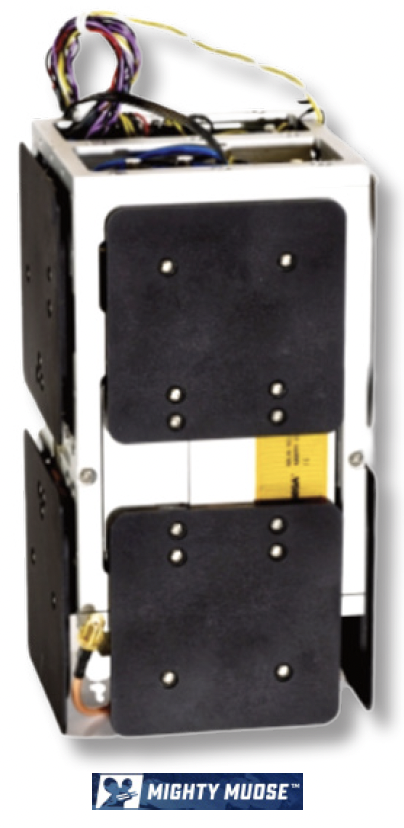
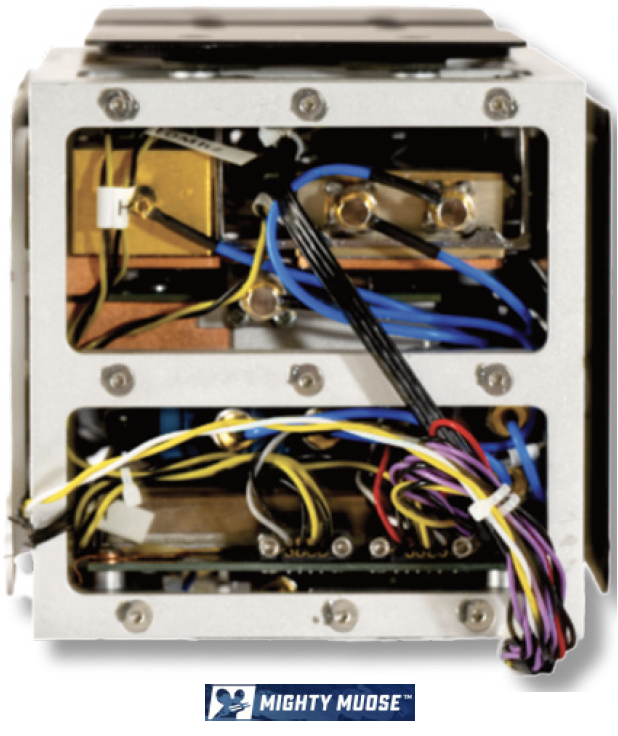
This allowed us to refine Mighty MUOOS™ and demo its capabilities to potential Department of War (DoW) partners.
SBIR support gave us the resources to iterate on design, integrate technical feedback, and position the system for eventual operational use.
At the time of this writing, the SBIR program is paused while Congress weighs reauthorization. That pause isn’t an abstract administrative issue. The pause interrupts a proven pipeline DoW relies on to infuse cutting-edge innovation into the force.
Small firms are often the ones pushing boundaries on portable SATCOM, resilient uplinks, rapid-repair diagnostics, and other niche capabilities that directly affect connectivity in contested and austere environments. Without SBIR to validate and mature those ideas under government scrutiny, many innovations risk stalling before they ever reach field trials.
For the acquisition community, this isn’t about sympathy for startups, but about preserving a low-cost, high-velocity path to mission impact. An SBIR award signals that a technical approach has passed competitive review and technical scrutiny. It gives program offices a vetted source of small company innovation to test and, when successful, procure. That signal reduces procurement risk and shortens the timeline from lab demonstration to operational capability.
When a pause occurs, program offices lose a reliable mechanism to discover and vet those niche solutions, and the force loses potential options it might urgently need on a short timeline.

The pause also has immediate downstream effects. Current awards continue, but new solicitations are halted, delaying funding, slowing development cycles, and introducing real uncertainty for firms timing hires, test schedules, supplier contracts, and Phase III transition plans.
For the DoW, that uncertainty translates into a thinner small business pipeline, precisely when agile, distributed innovation is required to counter contested, rapidly evolving threats.
Congress has taken steps to avoid a full lapse, but short extensions are a bandage, not a strategy. Reauthorization should preserve SBIR’s core while improving commercialization assistance, clarifying Phase III buy paths, and strengthening coordination among labs, integrators, and program offices so prototypes transition faster into fielded capabilities.
Those are practical fixes that reduce friction without losing the competitive rigor that makes SBIR effective.
To colleagues across acquisition and policy: Consider this a capability-centric appeal.
When small teams can rapidly test, iterate, and transition, program offices gain vetted technical options that reduce program risk and provide alternatives when supply chains, platform timelines, or operational environments require fast adaptation.

When those teams are cut off, the DoW risks narrower toolsets and slower responses to emerging problems.
SBIR was never a silver bullet. But for W5 and many other small firms, it was the difference between a napkin sketch and soldiers carrying a device that restores critical connectivity.
A pause in that program is more than procedural noise. It’s a potential capability gap. If we value responsive tactical connectivity, we should treat SBIR as an active part of the acquisition toolbox, not an expendable add-on.
Innovation at the edge matters. Soldiers depend on it.
Lawmakers and acquisition leaders must act to sustain the pathways that turn small ideas into operational advantage.
w5tech.com

Jason Ferguson
Jason Ferguson is president of W5 Technologies, an Arizona-based defense-tech firm that develops rugged portable communications systems, including the Mighty MUOOS™. He leads the company’s engineering and commercialization efforts and is an advocate for small business innovation, SBIR funding, and strengthening Arizona’s defense and aerospace ecosystem.
At W5 Technologies, we build the kind of wireless communication products we’d want to use ourselves—rugged, reliable, and simple to use. Our team pushes the state-of-the-art while using our 100 combined years of telecom experience designing, developing, deploying, and maintaining wireless equipment to keep us grounded. When you work with W5, we deliver results, backed by real-world experience. Our specialty is in developing cutting-edge MUOS-compatible equipment for defense applications. While other companies sell concepts, we build and deliver systems that work. From development to deployment, we guide our clients every step of the way—with technical support, installation integration, and real-world insight designed to eliminate surprises in the field.